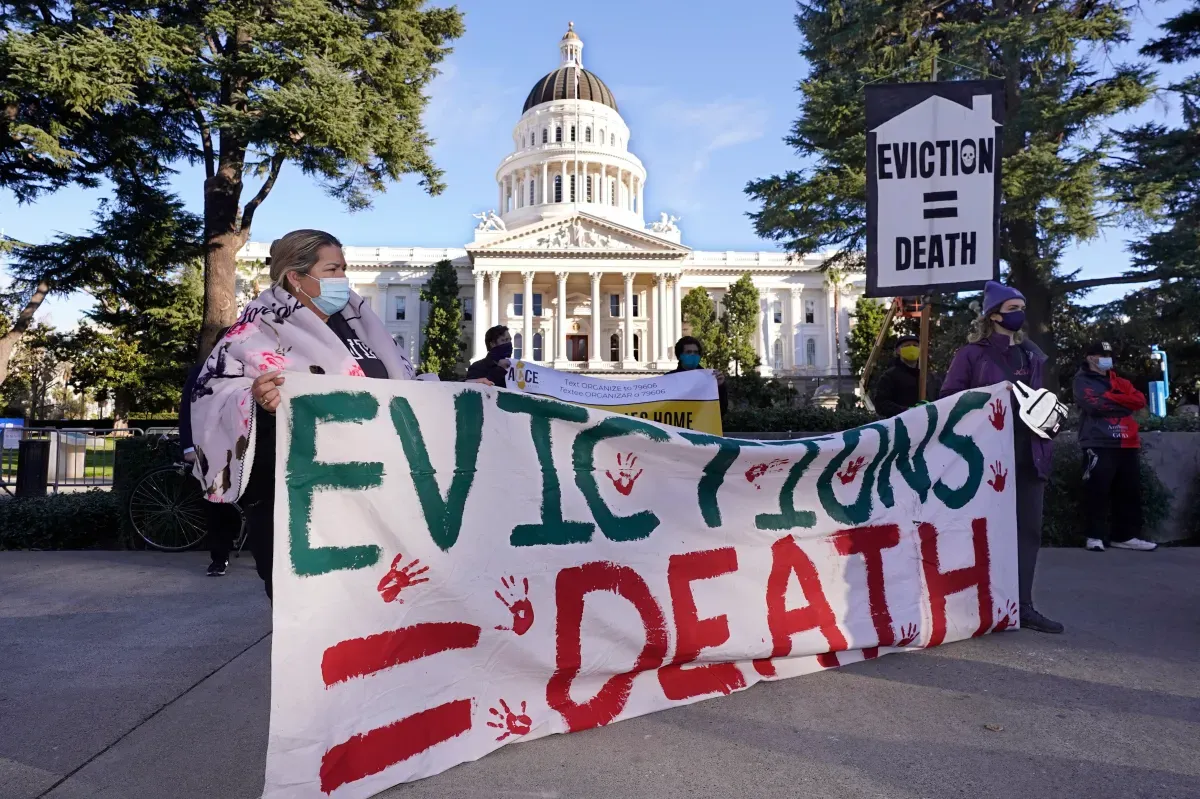
Despite eviction moratoriums and rent relief, families are still being evicted
Sahid is the founder and executive director of the Partnership for the Advancement of New Americans. She lives in City Heights.Even before the COVID-19 pandemic, approximately 14.5 percent of San D…

San Diego Union-Tribune

Source: Wayback availability API
Sahid is the founder and executive director of the Partnership for the Advancement of New Americans. She lives in City Heights.
Even before the COVID-19 pandemic, approximately 14.5 percent of San Diegans — almost 200,000 people — lived below the poverty line in city limits, struggling to make ends meet. According to the Legal Aid Society of San Diego, 2,341 San Diego residents called to receive assistance related to evictions from Oct. 1, 2018, to Sept. 30, 2019. A disproportionate number of calls, 47 percent or almost half, come from five ZIP codes that are predominantly low-income communities of color. In a market that has not produced an adequate supply of housing and where the cost of living continues to surge, the pandemic exacerbates existing wealth and racial disparities as more working families find themselves struggling and unable to afford rent.
Fortunately, federal, state and local officials have stepped in to provide immediate relief in the form of eviction moratoriums and rental assistance. While this assistance is necessary and provides the protections needed for families to remain safely housed during this pandemic, there are also major gaps in protections and families are falling through the cracks.
The reality is, despite the eviction moratoriums and available rent relief, families are still being evicted. Every day, our staff attorney and community organizer at the Partnership for the Advancement of New Americans (PANA) receive calls from families, often women, who have been served eviction notices or face an array of other challenges related to housing, such as landlord harassment, stolen security deposits, fake wait list fees or deplorable housing conditions.
One hundred percent of the time, we are able to prevent the eviction. Reasons landlords have given in eviction notices include removing, the unit from the rental market or having a family member move in. Unfortunately, most San Diego families aren’t connected to community-based organizations that can provide this type of support or they don’t know their rights or how to assert them.
In San Diego, where an estimated 71,463 San Diego County families are behind on rent, we’re headed towards a very scary future of mass evictions — where families will be required to make balloon payments on past due rent or on loans they took out to remain housed. The moment is now for San Diego leaders to act and go beyond emergency gap measures.
Our staff recently met with Rep. Sara Jacobs, D-San Diego, to discuss the immediate and long-term needs of vulnerable families. The meeting highlighted the epidemic of what has been termed hidden homelessness due to overcrowded housing, which is when families double up or triple up to afford a home. We also discussed the rent relief programs and the challenges families are facing accessing those funds and how the pandemic further highlights the need to rapidly and effectively address housing as a human right for San Diego’s refugee and extremely low-income families.
Data collected by PANA reveals that access to affordable housing can dramatically reduce unsafe and unhealthy housing conditions and increase outcomes for children. After adjusting for whether a participant was married or cohabiting, access to affordable housing had the strongest effect on whether or not a participant was likely to live in severely crowded housing. People who reported living in affordable housing were 66 percent less likely to be living in a severely crowded setting. According to a report by PolicyLink, affordable housing improves housing stability for families and their children, and leads to improved health and educational outcomes.
Ensuring families remain housed during this pandemic is of critical importance. Even more critical will be passing policies that equitably protect tenants when the moratoriums end.
First, we can and we should absolutely ensure that 100 percent of the available rent relief funds are exhausted. More can be done to make accessing rental relief less cumbersome by eliminating procedural hurdles that make it nearly impossible for people to get through the process and ensuring language access at every step of the application process. It is not uncommon for a family to apply for rent relief assistance and not hear back for months. Nervous families have borrowed money from friends and relatives to make rent, concerned they would be denied the rental assistance they applied for or that it would run out before they could be approved. Families that don’t have back-owed rent are then ineligible for and can be denied rental assistance.
Second, families must have a uniform and easy way to get information through the city about their housing rights and support should those rights be threatened. Unfortunately, without access to legal support, many people are unable to access available protections. The current court system is not an accessible option for most of the population. Households that are low-income, seniors on fixed incomes, refugees and immigrants with limited English proficiency, and families with vulnerable immigration status are not able to access justice through the courts without risking their economic stability and livelihoods.
Families facing eviction require immediate support within days. Without it, they risk losing their jobs and their homes.